31 December 2024
- Author:gospel
- Category:Sermons
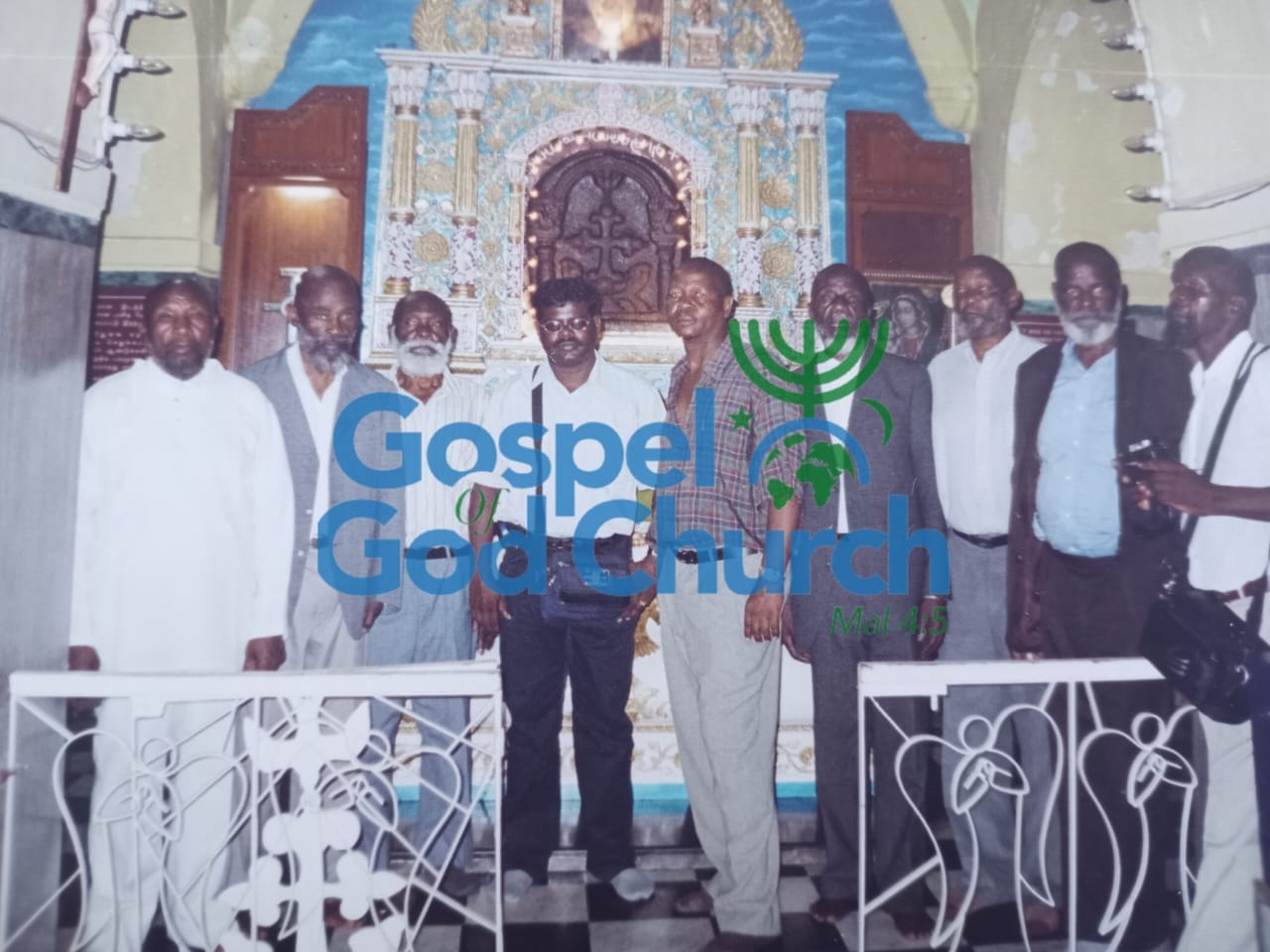
PHOTO: On the photo is the other half of the team that went to India in 2005. A few people could be missing from the picture including the former Senior Pastor Noel Muungani. Fourth from left is the first person in India to receive this gospel. Next was another (in fact a family) and third was one who some of you may have seen sometime back in Nairobi.
Once upon a time, in much of what is called the ‘Western’ or European world, New Year Celebrations were held from March to April every year. This went on possibly until around the 16th Century. The reason for this is easy to see. The early Christian Church was in Europe – besides Africa, the Middle East and Asia. Judaism interacted with Europe very early especially when Jews from the tribe of Benjamin fled reprisals. A lot of Jews especially the Apostles of Jesus preached across Europe - the reason why most of the New Testament Books have names of European places such as Rome (Italy), Corinth (Greece), and Galatia and Ephesus (Turkey). Therefore, even after the calendars widely used to date were developed, the New Year was celebrated from March to April.
Why March/April? The Hebrew Calendar which is still in use today, has its first month ‘Nisan’ falling between March and April. Therefore, at this time (written December 31St) people in Europe welcomed the New Year with festivities using the Gregorian calendars that are now universal. Over the years the celebrations in Europe or a part of it gravitated towards March 25 and eventually April 1 every year.
Janus the god of beginnings
Everybody knows January the month when New Year celebrations take place. What many do not know is that January was named after Janus who was the Roman god of beginnings, transition, time duality, doorways passages, frames and endings. He was associated with the beginning of the month, day and year. January was not always the first month of New Year celebrations until it was decided to honor Janus.
April Fools Day
As one can imagine there was resistance to such as change. It was resisted by the more conservative elements of the society. They kept on holding their celebrations on April 1, besides their diminishing clout.
This annoyed the Janus loyalists and it was decided that a way had to be devised to target and punish the conservatives. The method that was decided was to organize fake parties and do mock invitations because this would easily smoke them out of their hiding places and selectively bring them into the open. As a result, fake New Year parties would be called with bad food – with excess salt, pepper or anything unpalatable. Anyone who fell for the same was a fool. An April Fool. They would show up because of their belief and would be humiliated as fools because they refused to learn.
It is for this reason that April one remains the day of fools to date. All manner of lies and trickery happen, as pranks are pulled and celebrated.
The October 1, New Year
One interesting thing about the Hebrew calendar is that although Nisan remains the first month, the New Year Celebrations are carried out on the seventh month called Tishri (Numbers 29:1). Therefore, in Israel, the Jewish state, New Year celebrations take part during September/October in the month known as Tishri. Possibly for similar reasons Ethiopian (a country with old Jewish linkages) celebrates the New Year in September.
In Zimbabwe, once called Southern Rhodesia, on 1 October 1914 Baba Johane was born and exactly 18 years later on the very date, the Gospel of God Church was established. That became our New Year by the seventh month of the Gregorian calendar. It is not identical to the calendar in Israel or elsewhere. Though may in some rare instances overlap with the Hebrew New Year Celebrations.
Just to dwell on that a little more, the messenger was born on Thursday/Friday – because that issue in caused some debate somewhere – whereas Baba Johane spoke of being born on Friday, a calendar reference of that date will reveal that the day was a Thursday. So how was it Friday in his words? For those who remember the 1 October story, many of the events took place at 7 pm. That is the beginning of the next day biblically speaking. Just as the seventh day or Sabbath begins on Friday sunset, if one applies the rule to every day then he was born as the 6th day began. The reason in Kiswahili and some vernaculars we refer to it as ‘saa moja’ (or one o’clock) – as it is believed to be the beginning of a new day.
Clarifications
1. This information is for apostles to understand themselves wherever they may be.
2. It is meant to help us understand why the holy spirit says some celebrations are not ours. Therefore, January 1, remains a day like any other but is also a unique day just like any other public holiday stipulated by the state.
3. This information is intended to create more understanding than divisions.
4. Gospel of God remains in the year 2024 and transitioning to 2025 on January 1 – depending on where one is. The fact that the October New Year was celebrated. Does not change the calendar year. There was no earlier crossing to 2025 as some imagine. The same way in much of the commonwealth financial years end in June and start in July. So that Kenya is now in FY 2024/25.
5. October 1 though is celebrated does not include raveling or anything that is prohibited on a day to day. Something that is wrong does not become right because of New Year celebrations.
For all those who have taken time to read, receive our prayers for happiness and God’s blessing. That includes the calendar year ending, that is about to start and every other day. Keep on logging in and reading on.